Agents
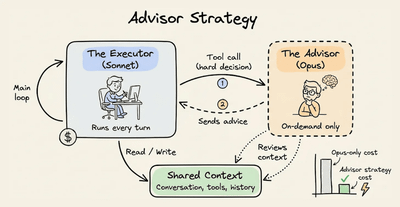
Advisor Strategy in Agents
Reduce token costs and improve performance...and how to use it with Claude!

410 posts published
Reduce token costs and improve performance...and how to use it with Claude!
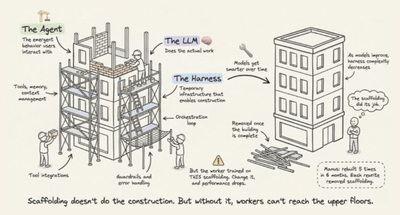
A deep dive into what Anthropic, OpenAI, Perplexity and LangChain are actually building.
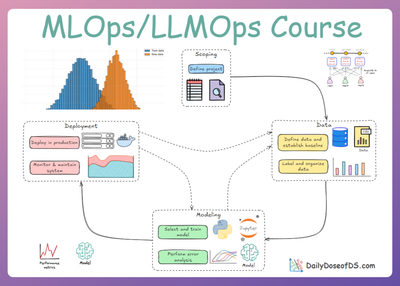
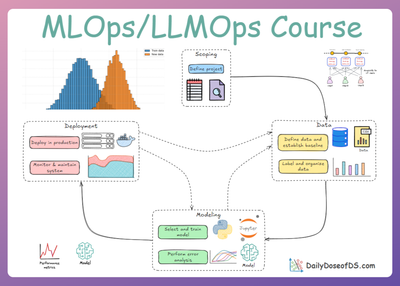
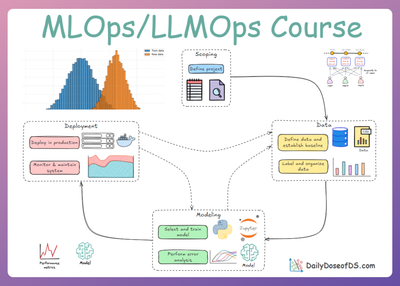
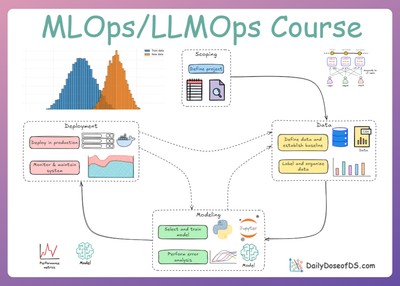
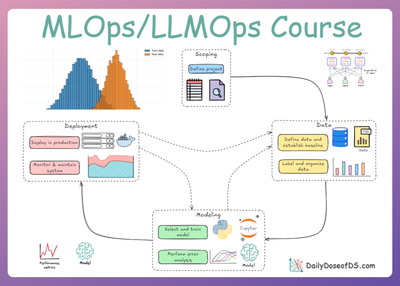
An exploration of real-world MLOps and LLMOps case studies, examining the importance of reliable ML and AI engineering and their significance for business outcomes.
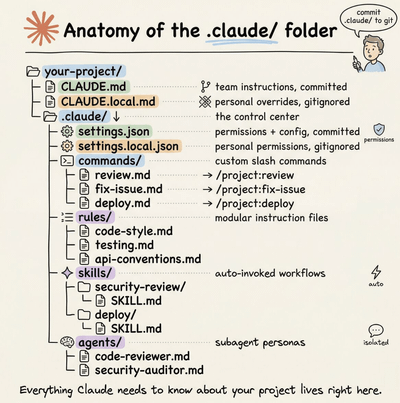
A complete guide to CLAUDE.md, custom commands, skills, agents, and permissions, and how to set them up properly.
LLMOps Part 14: An overview of the fundamentals of LLM serving, including API-based access, inference with vLLM, and practical decisions.
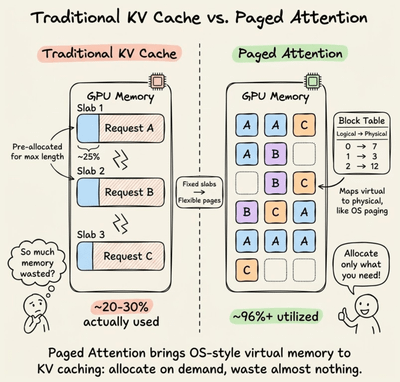
LLMOps Part 13: Exploring the mechanics of LLM inference, from prefill and decode phases to KV caching, batching, and optimization techniques that improve latency and throughput.
...explained visually.
LLMOps Part 12: Understanding LLM fine-tuning, parameter-efficient methods like LoRA and QLoRA, and alignment techniques such as RLHF, DPO, and GRPO.
...explained visually!
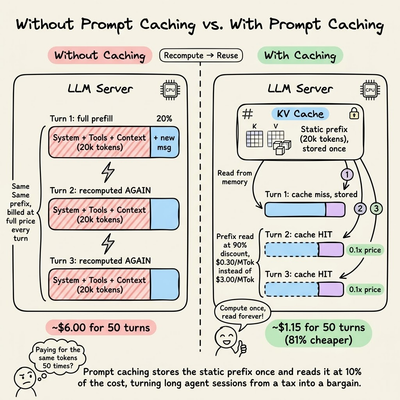
A case study on how Claude achieves 92% cache hit-rate.
LLMOps Part 11: Understanding evaluation of conversational LLM systems, tool evaluations, tracing with Langfuse, and automated red teaming.
LLMOps Part 10: Understanding model benchmarks, LLM application evaluation, and tooling.
LLMOps Part 9: A foundational guide to the evaluation of LLM applications, covering challenges and a practical taxonomy of evaluation methods.
LLMOps Part 8: A concise overview of memory, dynamic and temporal context in LLM systems, covering short and long-term memory, dynamic context injection, and some of the common context failure modes in agentic applications.
LLMOps Part 7: A conceptual overview of context engineering, covering context types, context construction principles, and retrieval-centric techniques for building high-signal inputs.
LLMOps Part 6: Exploring prompt versioning, defensive prompting, and techniques such as verbalized sampling, role prompting and more.
LLMOps Part 5: An introduction to prompt engineering (a subset of context engineering), covering prompt types, the prompt development workflow, and key techniques in the field.
LLMOps Part 4: An exploration of key decoding strategies, sampling parameters, and the general lifecycle of LLM-based applications.
LLMOps Part 3: A focused look at the core ideas behind attention mechanism, transformer and mixture-of-experts architectures, and model pretraining and fine-tuning.
Tools, prompts and resources form the three core capabilities of the MCP framework. Capabilities are essentially the features or functions that the server makes available. * Tools: Executable actions or functions that the AI (host/client) can invoke (often with side effects or external API calls). * Resources: Read-only data sources
At its heart, MCP follows a client-server architecture (much like the web or other network protocols). However, the terminology is tailored to the AI context. There are three main roles to understand: the Host, the Client, and the Server. Host The Host is the user-facing AI application, the
Without MCP, adding a new tool or integrating a new model was a headache. If you had three AI applications and three external tools, you might end up writing nine different integration modules (each AI x each tool) because there was no common standard. This doesn’t scale. Developers of
Imagine you only know English. To get info from a person who only knows: * French, you must learn French. * German, you must learn German. * And so on. In this setup, learning even 5 languages will be a nightmare for you. But what if you add a translator that understands all
LLMOps Part 2: A detailed walkthrough of tokenization, embeddings, and positional representations, building the foundational translation layer that enables LLMs to process and reason over text.
AI Agents Crash Course—Part 17 (with implementation).