AI Agents Course
Durable Agents with LangGraph and LangSmith
Part 6: State that survives crashes, approvals that expire, evaluations that gate releases, and an authenticated streaming API.

435 posts published
Part 6: State that survives crashes, approvals that expire, evaluations that gate releases, and an authenticated streaming API.
Part 5: Parallel specialist workers, shared state, and a reviewer that reconciles their findings.
Part 4: Plans, independent verification, stuck detection, budgets, and loops that stop when the task is done.
Part 3: Retries, fallbacks, routing, guardrails, permissions, and the first human-in-the-loop interrupt.
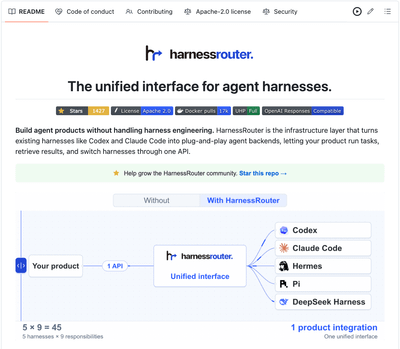
How UHP and HarnessRouter standardize agent execution across Codex, Claude Code, Hermes, and other runtimes.
We have been using LLMs like a hammer for every AI problem, even simple decisions. Jev handles those decisions in milliseconds at a fraction of the cost. Let's understand how it works and where it fits.
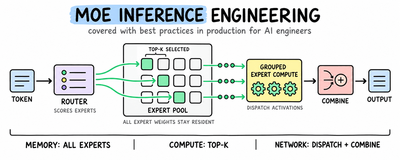
Everything you need to understand how MoE serving engines route tokens, batch expert computation, distribute weights across GPUs, and manage communication and load imbalance.
Part 2: Dynamic prompts, memory, compression, and isolation with middleware
Part 1: Tools, structured output, runtime context, and tracing, in one small agent.
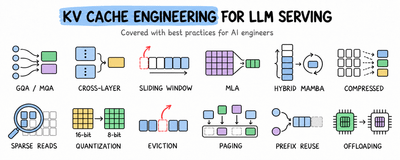
12 techniques to manage KV cache in production.
Part 15: Block-Attention, Cartridges, and what running preloading in production actually involves, with implementations
...explained with best practices in production.
Building real systems on top of large language models.
Everything you need to understand, set up, and get real work out of Grok Bot.
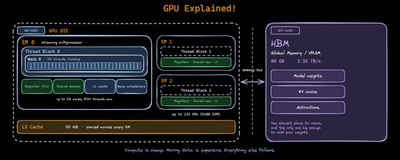
The intuition an LLM engineer needs, without the hardware manual. By the end, techniques like quantization, speculative decoding, and continuous batching should stop looking like a list of tricks to memorize.
Part 14: Shrinking a preloaded cache and the problems with those approaches, covered with implementations
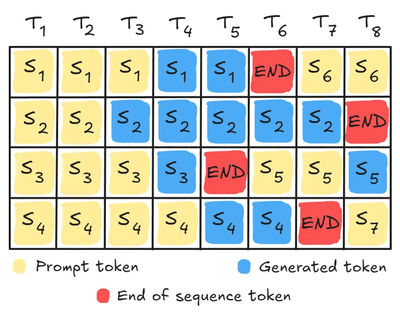
The technique behind vLLM's 23x throughput jump and the default scheduler in every serving engine.
Part 13: Reading the corpus once before any query arrives, and the two limitations that decide whether it works in production, with implementations
...explained visually.
Building a pattern recognition layer for memory in production.
Part 12: Why prefill dominates RAG latency, and how to reuse KV caches that share no prefix, with implementations
...explained visually.
...step-by-step, from scratch, using an open-source stack.
RL Part 13: An exploration of real-world RL case studies.
How the best builders in tech are all converging on AI second brains.
A complete guide to build production-grade SLM pipelines.
...explained step-by-step with code.
RL Part 12: From a single judged group to a full multi-step training loop with ART and RULER.
A practitioner's guide to KV cache management in production.
...explained with code.



![[Hands-on] Rebuilding Claude Code's Harness](https://storage.ghost.io/c/3f/df/3fdf6ed2-17ac-4b12-a693-8078bd13e748/content/images/size/w400/2026/07/f3efbbc7-24b4-4c59-965d-6c3d3fc3c694_1200x1200.webp)