LLMs
ARQ: A New Structured Reasoning Approach for LLMs
...that actually prevents hallucinations (explained visually).

Avi Chawla
...that actually prevents hallucinations (explained visually).
Researchers have open-sourced a new reasoning approach that actually prevents hallucinations in LLMs.
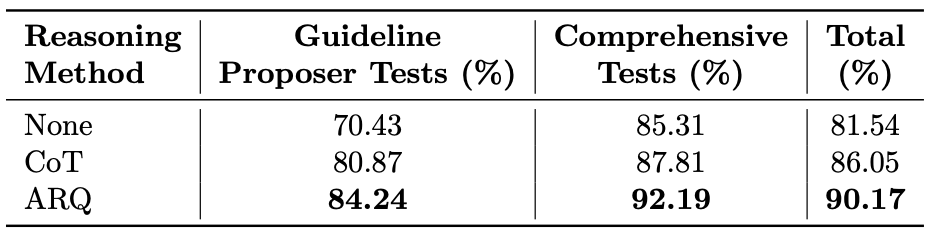
It beats popular techniques like Chain-of-Thought and has a SOTA success rate of 90.2%.
It’s implemented in the Parlant open-source framework to build instruction-following Agents (GitHub repo).
Here’s the core problem with current techniques that this new approach solves.
We have enough research to conclude that LLMs often struggle to assess what truly matters in a particular stage of a long, multi-turn conversation.
For instance, when you give Agents a 2,000-word system prompt filled with policies, tone rules, and behavioral dos and don’ts, you expect them to follow it word by word.
But here’s what actually happens:
This means they can easily ignore crucial rules (stated initially) halfway through the process.
We expect techniques like Chain-of-Thought will help.
But even with methods like CoT, reasoning remains free-form, i.e., the model “thinks aloud” but it has limited domain-specific control.
That’s the exact problem the new technique, called Attentive Reasoning Queries (ARQs), solves.
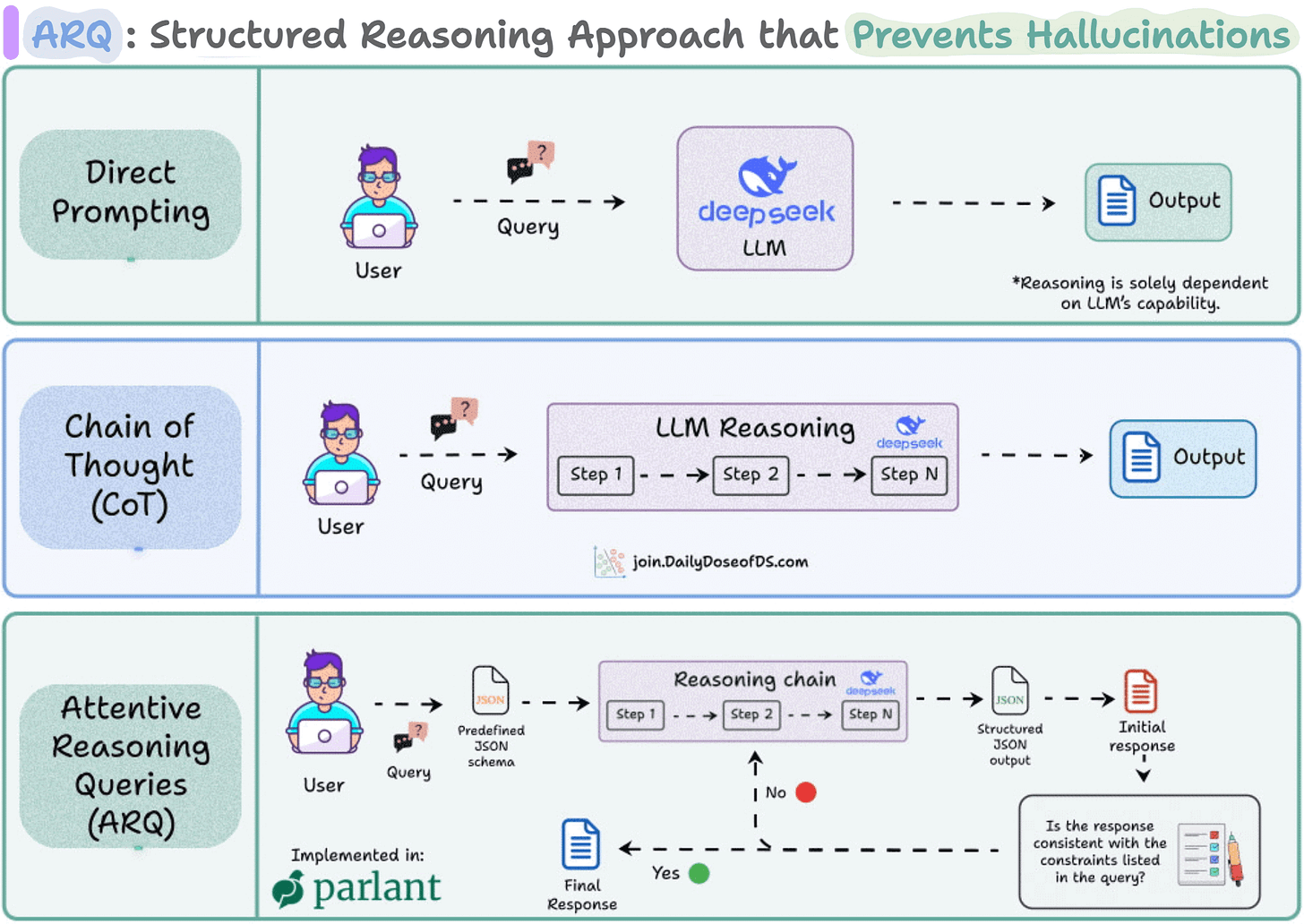
Instead of letting LLMs reason freely, ARQs guide them through explicit, domain-specific questions.
Essentially, each reasoning step is encoded as a targeted query inside a JSON schema.
For example, before making a recommendation or deciding on a tool call, the LLM is prompted to fill structured keys like:
{
  “current_context”: “Customer asking about refund eligibility”,
  “active_guideline”: “Always verify order before issuing refund”,
  “action_taken_before”: false,
  “requires_tool”: true,
  “next_step”: “Run check_order_status()”
}
This type of query does two things:
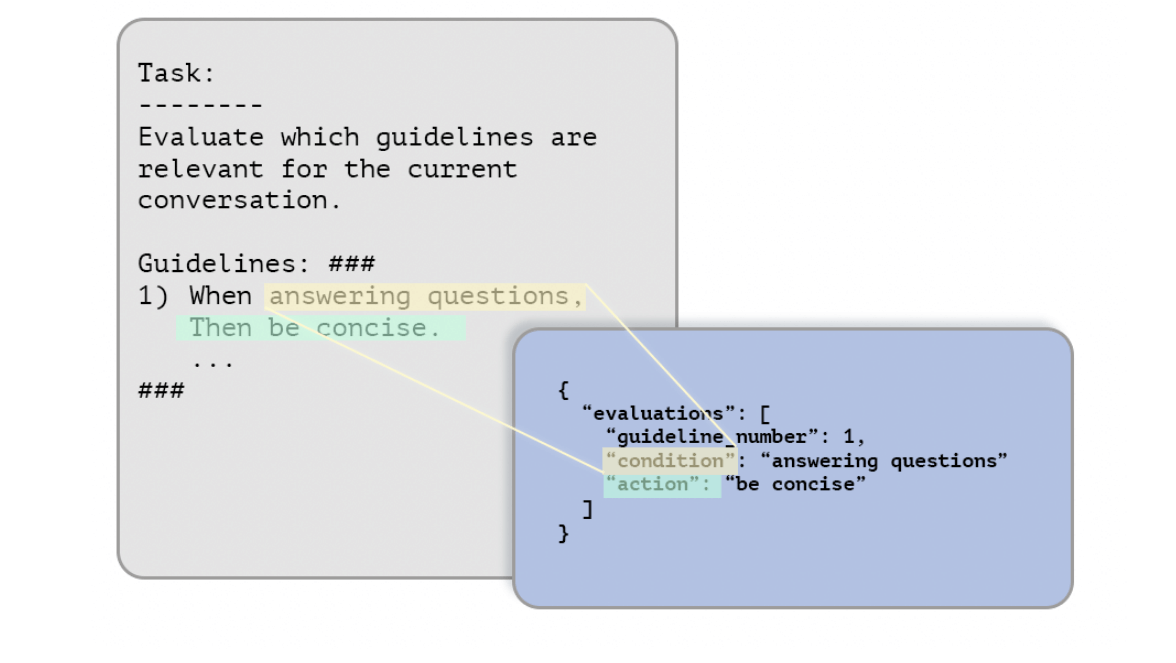
By the time the LLM generates the final response, it’s already walked through a sequence of *controlled* reasoning steps, which did not involve any free text exploration (unlike techniques like CoT or ToT).
Here’s the success rate across 87 test scenarios:
This approach is actually implemented in Parlant, a recently trending open-source framework to build instruction-following Agents (14k stars).
ARQs are integrated into three key modules:
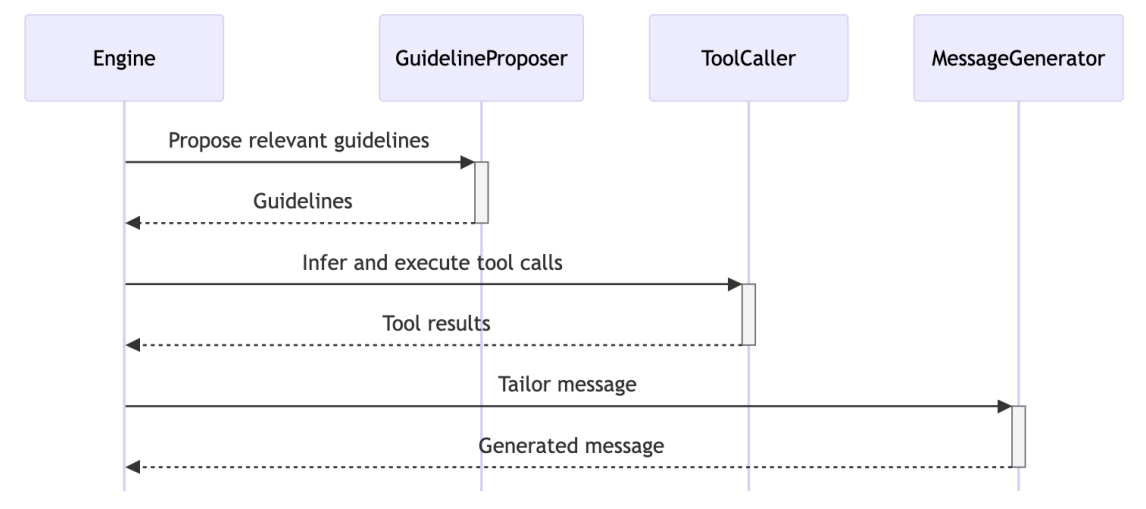
You can see the full implementation and try it yourself.
But the core insight applies regardless of what tools you use:
When you make reasoning explicit, measurable, and domain-aware, LLMs stop improvising and start reasoning with intention. Free-form thinking sounds powerful, but in high-stakes or multi-turn scenarios, structure always wins.
You can find the Parlant GitHub repo here →
Thanks for reading!