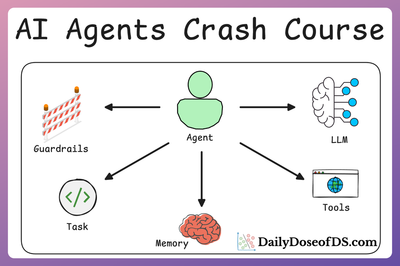
AI Agents Course
First Steps Towards a Production-Ready Agent with LangChain
Part 1: Tools, structured output, runtime context, and tracing, in one small agent.
15 posts published
Part 1: Tools, structured output, runtime context, and tracing, in one small agent.
RL Part 13: An exploration of real-world RL case studies.
RL Part 12: From a single judged group to a full multi-step training loop with ART and RULER.
RL Part 11: From verifiable rewards to LLM-as-a-judge.
RL Part 10: Dropping two models from the four-model pipeline, and building rewards you can trust.
Part 9: From human preferences to a trained reward signal, and the four-model PPO pipeline.
RL Part 8: Trust regions, the clipped surrogate, and the workhorse of modern RL.
RL Part 7: Learning the policy directly, from REINFORCE to actor-critic.
RL Part 5: From tables to parameterized value functions.
RL Part 4: Learning value functions and policies without a model. Monte Carlo methods, TD(0), SARSA, Q-learning, and the bias-variance bridge between them.
RL Part 3: Bellman expectation and optimality equations, policy iteration, value iteration, and why dynamic programming needs a model.
RL Part 2: Markov decision processes, returns, policies, and value functions.
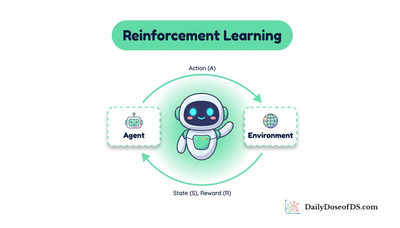
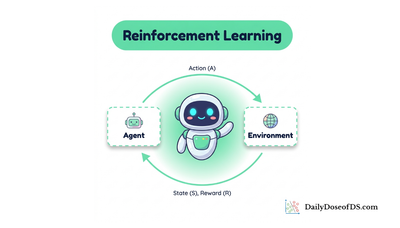
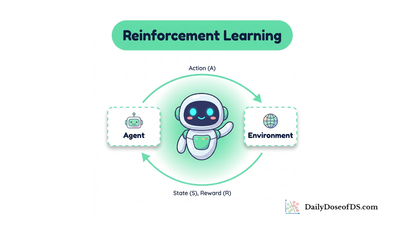
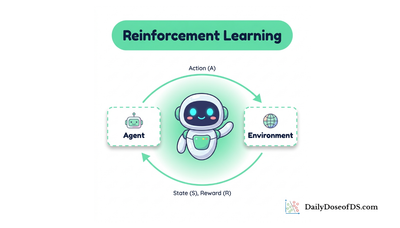
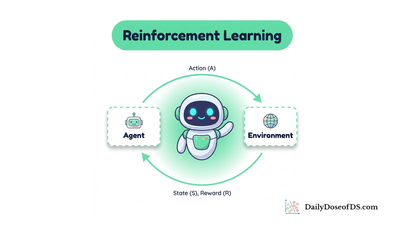
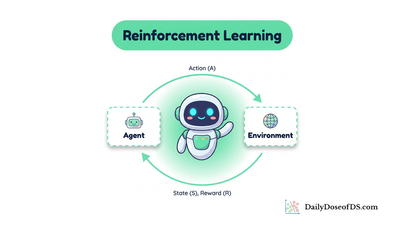
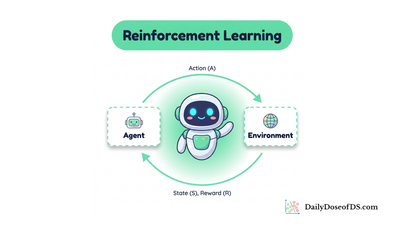
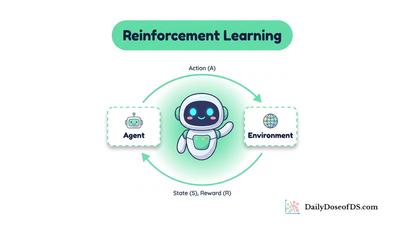
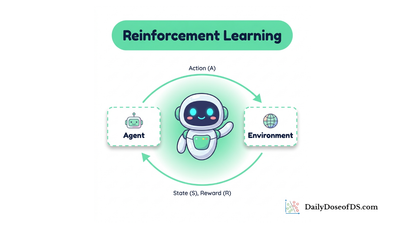
RL Part 1: Agents, environments, rewards, and why RL is different from supervised learning.
LLMOps Part 14: An overview of the fundamentals of LLM serving, including API-based access, inference with vLLM, and practical decisions.
LLMOps Part 8: A concise overview of memory, dynamic and temporal context in LLM systems, covering short and long-term memory, dynamic context injection, and some of the common context failure modes in agentic applications.